Helping children build a strong foundation in mathematics requires consistent practice and the right tools. Our latest resource simplifies complex concepts, ensuring that students feel confident and capable as they tackle new challenges in their daily studies.
Understanding Our Math Resource
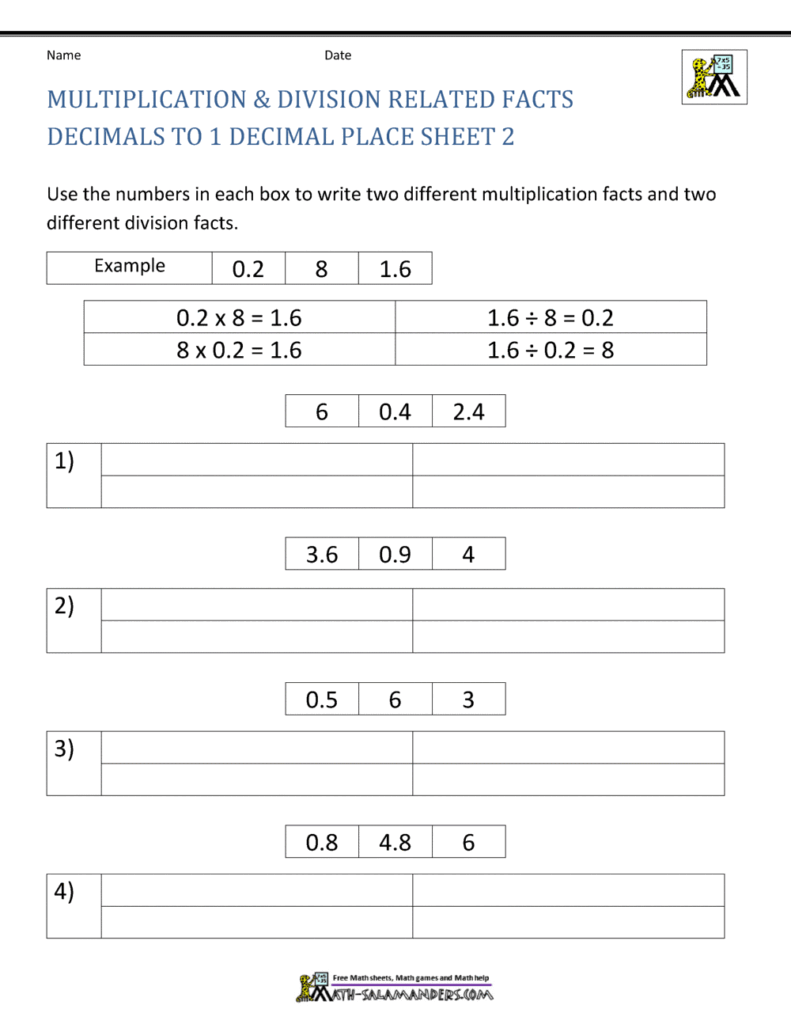
This resource is designed to bridge the gap between abstract arithmetic and practical application. By focusing on division and multiplication of decimals worksheets, we provide a structured way for students to navigate place value and decimal placement. While many students feel intimidated by decimals, these exercises break down the process into manageable, bite-sized steps. Ideally suited for upper elementary students in grades 4 through 6, this material reinforces the essential skills required for more advanced algebraic thinking later on.
Key Skills and Concepts
Beyond the basic calculations, these printable worksheets encourage children to develop a sharp eye for detail. When students engage with these problems, they are not just performing arithmetic; they are learning to recognize patterns in how numbers grow or shrink based on decimal placement. This type of counting practice helps solidify number recognition and the logic behind shifting digits. Whether it is moving the decimal point to the right during multiplication or to the left during division, learners gain the procedural fluency necessary for long-term success.
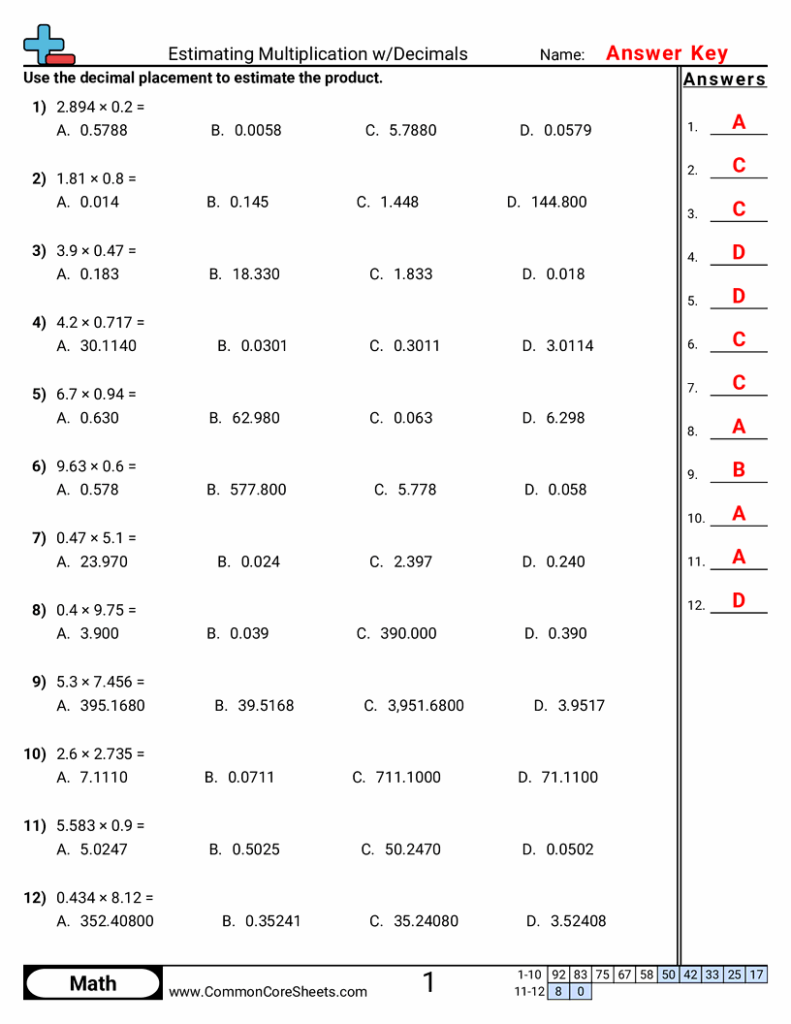
Incorporating these pages into your routine is quite simple, whether you are in a traditional classroom or a homeschool environment. You might introduce the worksheet as a focused morning warm-up to get those mental gears turning before a larger lesson. For teachers, these sheets serve as an excellent tool for independent center work while you provide small-group support to those who need it most. Parents can also use them as a low-pressure way to review what was learned in school, helping to prevent the common slide that happens after a long weekend.
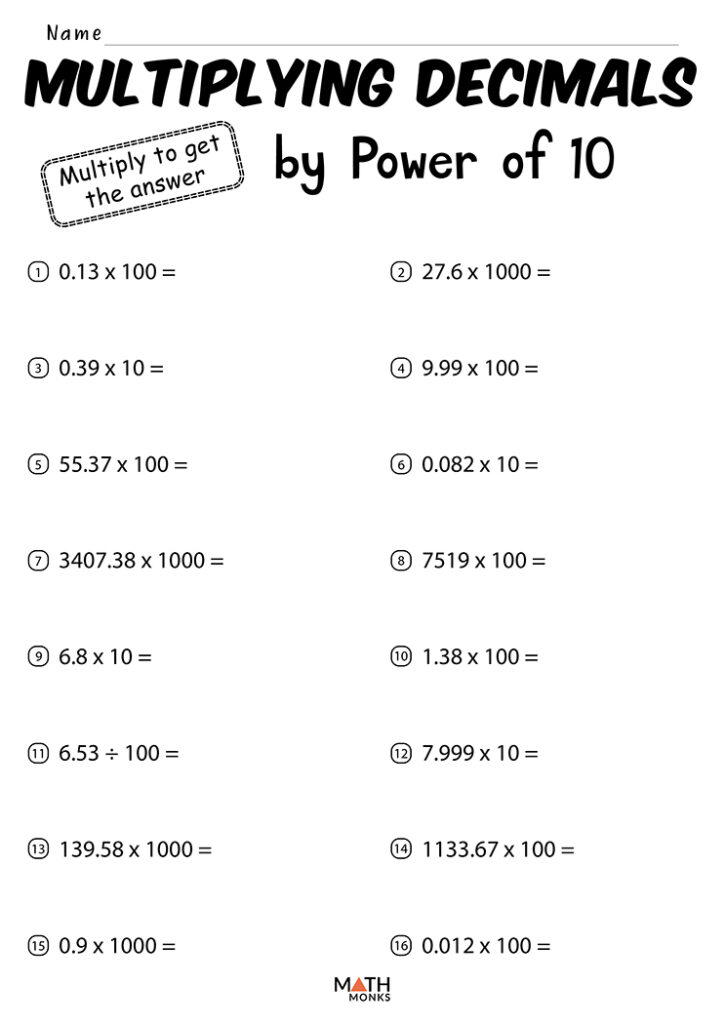
To keep the learning momentum going, consider using the worksheet as a starting point for hands-on exploration. You could use base-ten blocks or virtual manipulatives to visually represent what happens when a number is divided or multiplied by a decimal. For instance, if the problem involves money, use play coins to show how dividing a dollar into smaller parts changes the total value. By connecting the paper-based exercises to physical objects, you turn early math into a tangible experience that sticks in a child's memory much longer than rote memorization ever could.
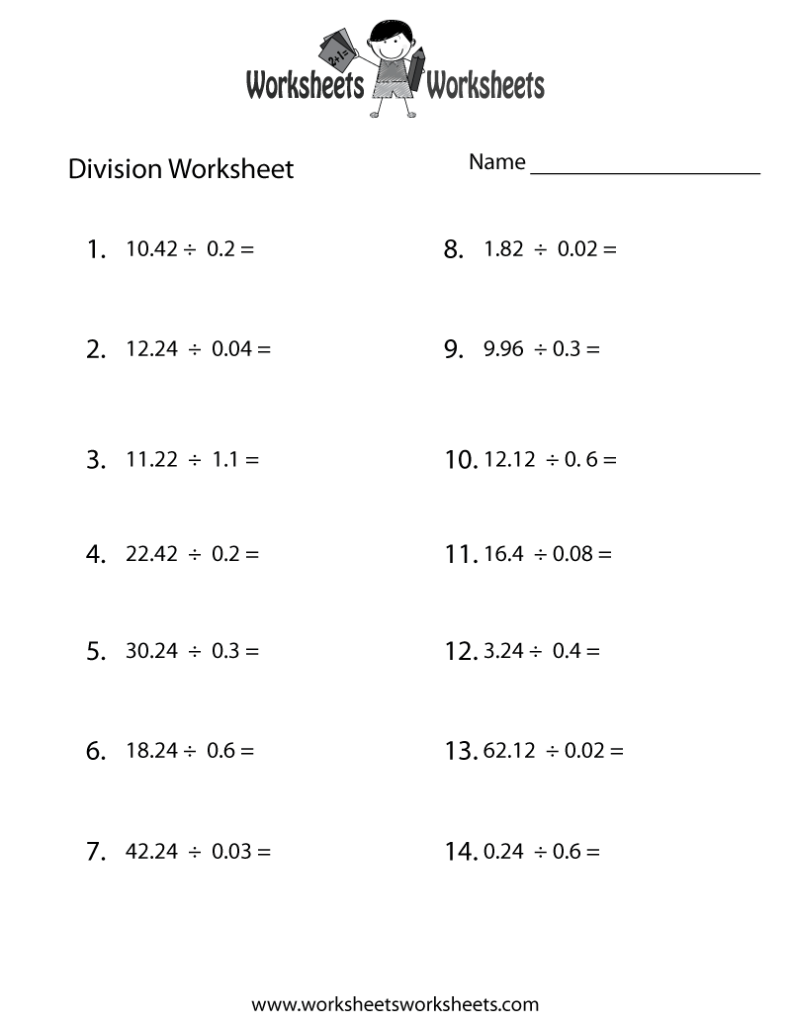
Ultimately, the goal is to make math feel like a friendly puzzle rather than a daunting hurdle. If a child finds a particular section tricky, feel free to use the worksheet as a guide to talk through the problem-solving process out loud. Encouraging them to explain their logic helps them own the material and identify their own strengths. With a blend of these printable worksheets and creative, hands-on play, you will foster a positive relationship with numbers that lasts well beyond the school day.