Geometry can often feel abstract, but mastering visual patterns is the key to success in high school math. If you are helping a student navigate spatial reasoning, our worksheet 80 overlapping congruent triangles answers guide is the perfect resource for building geometric confidence.
This specific set of practice problems focuses on the complex visual task of identifying congruent shapes hidden within more intricate geometric figures. By requiring students to isolate overlapping triangles, the worksheet forces them to look beyond the surface of a diagram and recognize shared sides or angles. Having access to the worksheet 80 overlapping congruent triangles answers allows a teacher or parent to immediately clarify why two triangles are considered identical, even when they share a common vertex or side segment.
Why Worksheet 80 Matters for Geometry
The core of this exercise is the development of deductive reasoning skills in a spatial context. Students must practice applying SSS, SAS, and ASA postulates while mentally deconstructing diagrams that are intentionally designed to be distracting. By checking their work against the worksheet 80 overlapping congruent triangles answers, learners can pinpoint exactly where they may have misidentified a corresponding side or misread a vertical angle. This level of precision is essential for moving from basic shape recognition to formal geometric proofs.
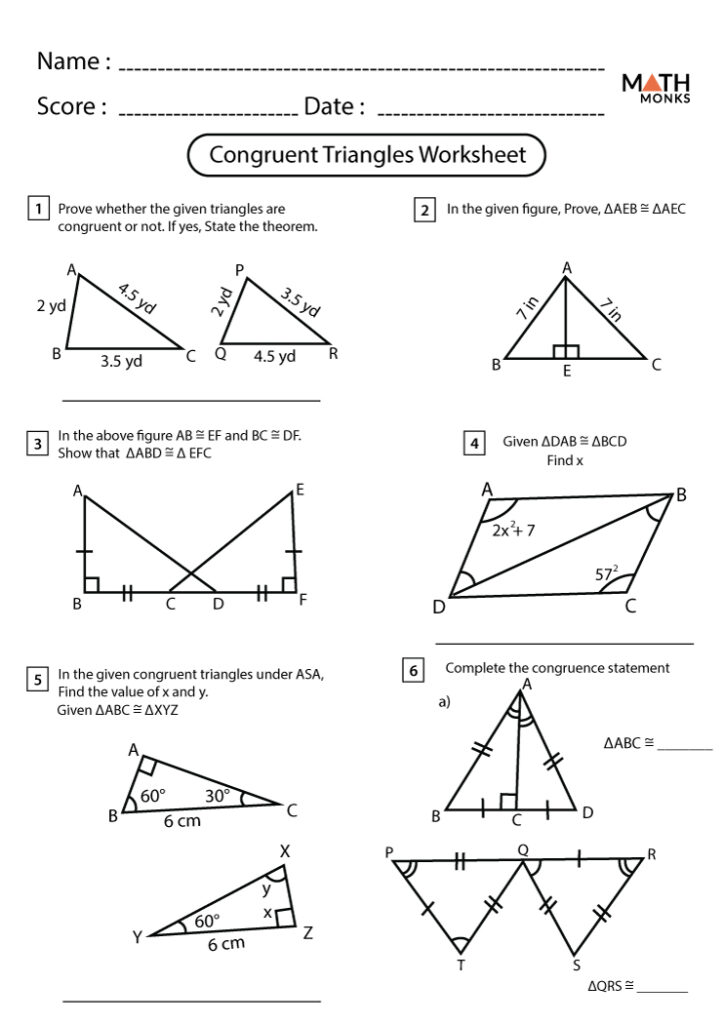
This material is most suitable for middle schoolers beginning their journey into logic-based mathematics or high school geometry students who need extra support with proof-writing. It bridges the gap between simple identification and the rigorous analytical thinking required for more advanced trigonometry and calculus later on. If a student is consistently struggling with overlapping diagrams on tests, this focused practice provides the repetition needed to build pattern recognition and reduce performance anxiety.
Practical Classroom and Home Applications
To get the most out of this resource, consider using it as a targeted intervention rather than just a homework assignment. Encourage students to use different colored highlighters to shade the individual triangles within each diagram before they write out their proofs. Once they have completed the problems, compare their reasoning with the worksheet 80 overlapping congruent triangles answers to ensure they are using the correct vocabulary for congruent parts. This creates an open dialogue about the logic behind the proofs rather than just focusing on the final result.
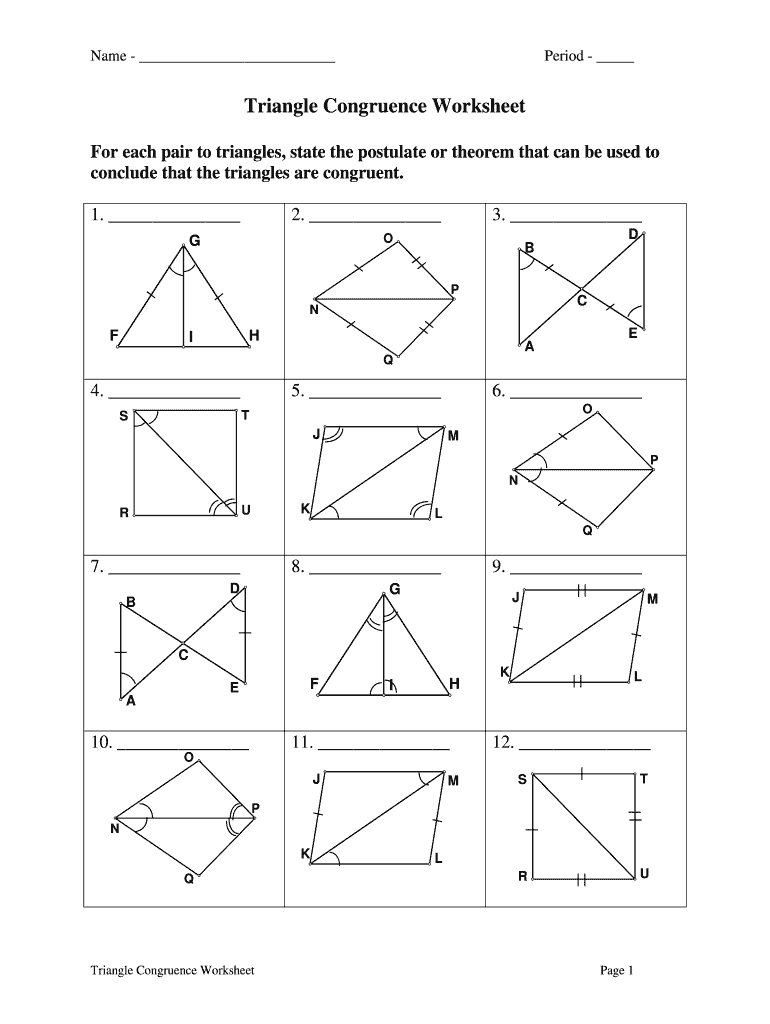
Hands-on learning can significantly enhance the impact of these paper-based exercises. You might have the student cut out two identical triangles from construction paper and physically overlap them to mimic the diagrams they see on the page. This tactile experience helps students realize that overlapping parts are simply two distinct shapes sharing physical space. As they navigate the worksheet, they can mentally map these physical shapes onto the printed diagrams, making the abstract concepts of congruence much easier to visualize.
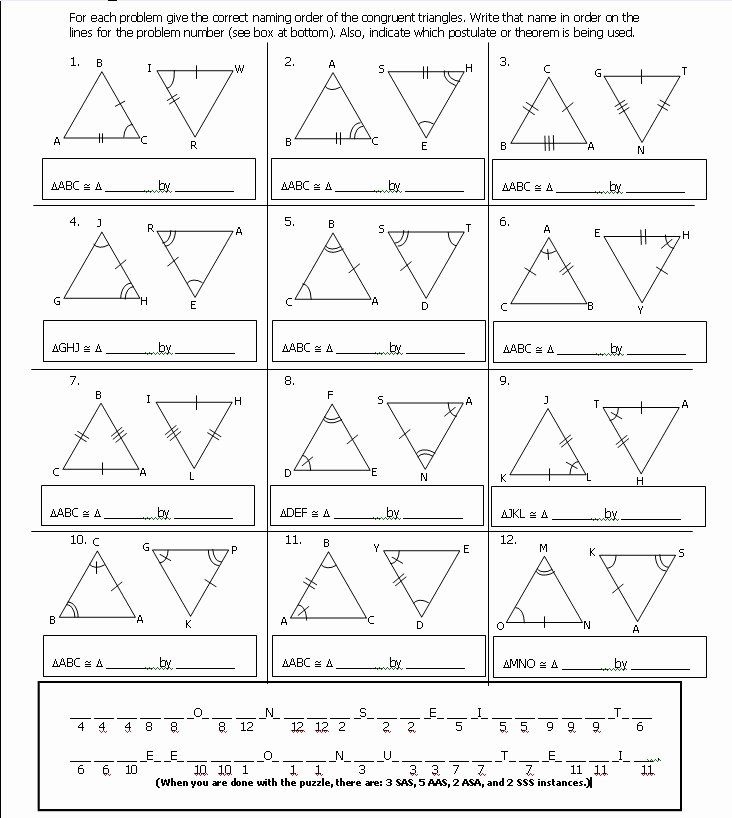
Beyond the worksheet, incorporate a search-and-find game by asking the student to spot congruent triangles in household items or architecture. Looking for triangular patterns in bridge trusses, roof rafters, or even tiling designs reinforces the idea that geometry is everywhere. You can challenge them to draw their own overlapping shapes and then trade papers to identify the congruent parts. By moving between the worksheet and the real world, you provide a comprehensive framework for understanding how geometric relationships function in physical space.
In addition to these games, keeping a math journal helps solidify the terminology related to congruence, such as corresponding vertices and reflexive properties. When a student writes down the definition of these terms in their own words, they develop a deeper connection to the material. Using the answer key as a reference point during this process ensures that they are using the correct mathematical language when describing their steps and justifying their conclusions.
Consistent practice with these visual challenges will ultimately transform the way a student approaches geometry. By systematically breaking down complex figures and validating their findings with the provided solutions, students build the persistence required to tackle even the most difficult proofs. Integrating these activities into your daily routine turns a potentially frustrating topic into a rewarding exploration of logic and spatial awareness that will serve them well in all their future academic endeavors.