Helping children master their multiplication tables can feel like a daunting task, especially when they reach those trickier higher digits. Finding the right resources to make practice engaging is the best way to keep them motivated throughout the school year.
Many students feel confident with their twos and fives but often hit a wall once they encounter the seven times table. This is a common milestone in third-grade math, and having a reliable set of multiplication by 7 worksheets can make a significant difference in a student's fluency. These printable pages offer a structured approach to repetition, which is essential for building long-term memory and mathematical speed in a classroom or home setting.
Why Use Multiplication by 7 Worksheets
These worksheets are specifically designed to isolate the seven times table, allowing students to focus their attention without feeling overwhelmed by an entire grid. By isolating these specific facts, children can recognize patterns in the multiples, such as how 7, 14, and 21 relate to each other. This targeted practice is perfect for students who need extra support to reach grade-level expectations or for those who simply enjoy a bit of extra drill work to boost their confidence.
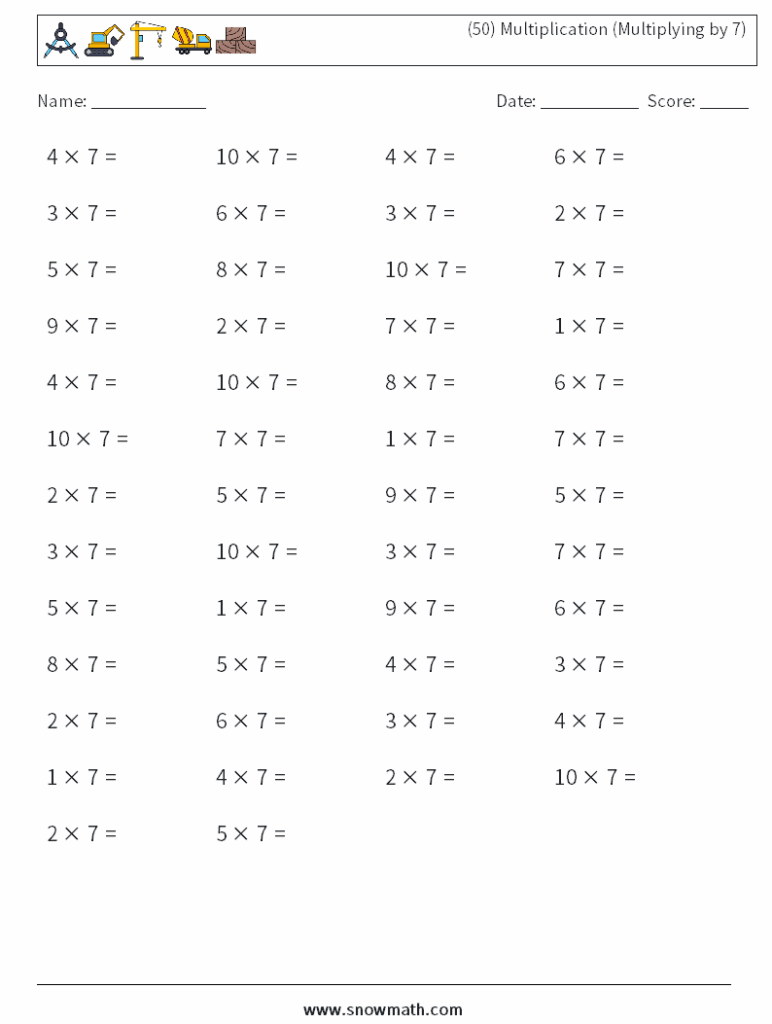
For teachers, these handouts provide an easy way to assess where a child is struggling during a lesson. Parents and homeschoolers will appreciate how easy it is to print a fresh page whenever a child needs a five-minute refresher. Because they are straightforward and clear, they work well as morning bell-ringers, quick homework assignments, or even as a calm-down activity that keeps young minds sharp during quiet time.
How to Use These Math Practice Pages
To get the most out of these materials, start by having your learner recite the sequence of sevens out loud before they pick up their pencil. Incorporating verbal practice helps bridge the gap between abstract numbers and physical writing. You can encourage them to look for patterns, such as the relationship between seven times two and seven times four, which helps reinforce the concept of doubling in multiplication.
Once they finish a page, review the answers together to celebrate the facts they have mastered. If you notice they are consistently missing a specific fact, like seven times eight, you can create a small flashcard for that problem to keep on their desk. Keeping the experience low-pressure and positive ensures that they do not develop math anxiety and instead see the work as a fun challenge to overcome.
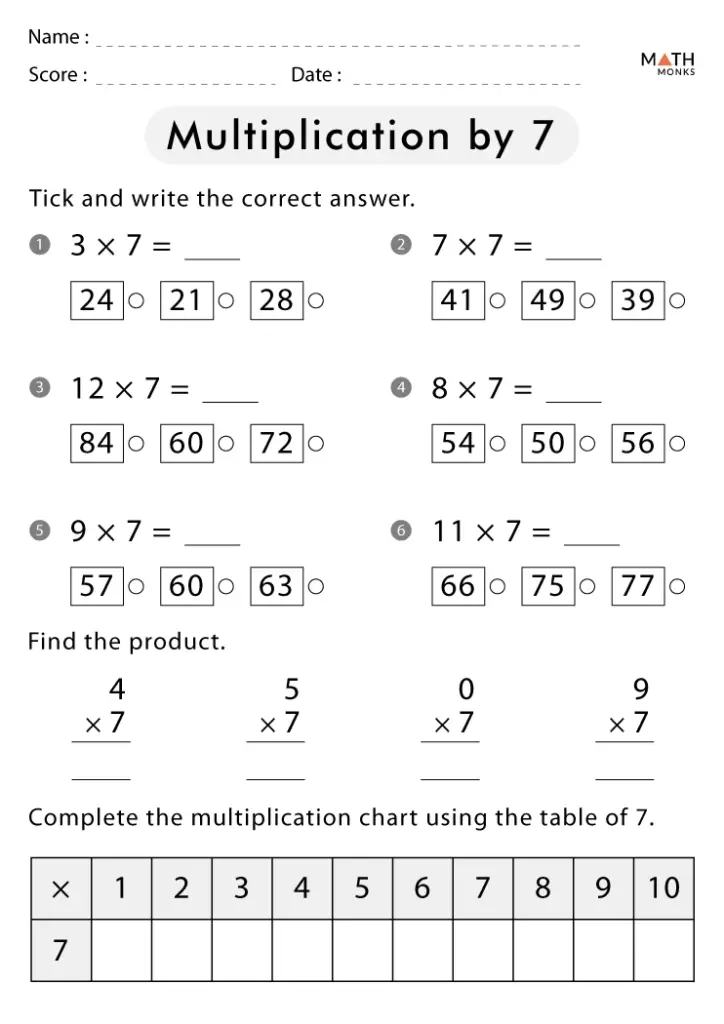
The primary benefit of using these sheets is the development of automaticity, which allows students to solve more complex equations later on. When the basic multiplication facts become second nature, a child can dedicate more mental energy to word problems, long division, and geometry. This foundational knowledge creates a sense of accomplishment that often leads to increased interest in more difficult math concepts.
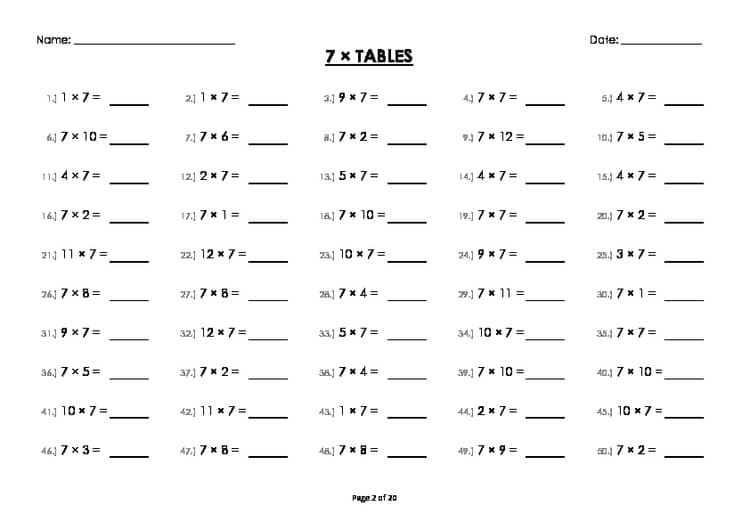
Beyond just calculation skills, these activities help improve attention to detail and fine motor coordination in younger learners. The act of writing out the numbers helps cement the logic of multiplication in a way that digital games sometimes miss. Seeing a page full of correct answers is a powerful motivator that builds a positive association with hard work and academic progress.
Whether you are a teacher looking for supplemental material or a parent supporting your child at the kitchen table, these resources are here to help. Consistency is the secret ingredient to success, so try to integrate a few minutes of practice into your daily routine whenever possible. With a little bit of patience and the right tools, your child will be a pro at multiplying by seven in no time.