Developing strong foundational math skills is a milestone every kindergartner works toward. Using targeted printable learning activities, such as our newest math resource, helps children build confidence while mastering the essential concepts of greater than, less than, and equal to.
Mastering Comparing Numbers Worksheets for Kindergarten
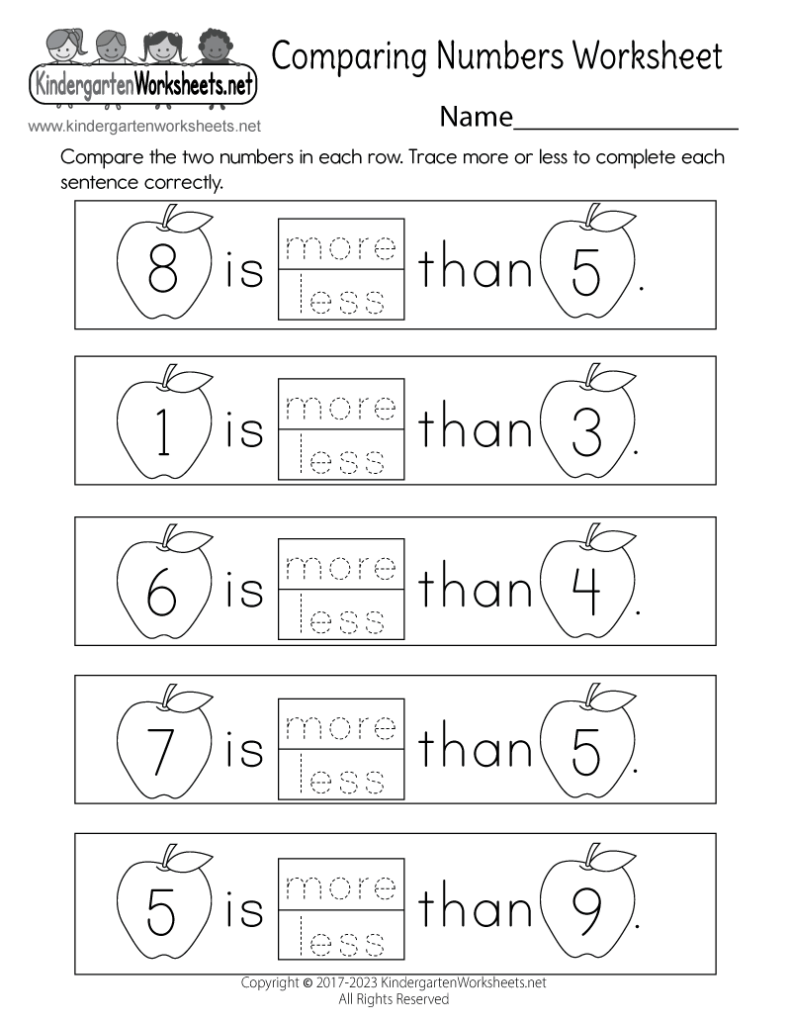
These worksheets serve as a bridge between abstract numerical concepts and visual understanding. By focusing on comparing numbers worksheets for kindergarten, students learn to evaluate the size and value of different sets before moving into addition and subtraction. This practice encourages children to look closely at quantities, reinforcing the idea that numbers represent real-world amounts. As they trace symbols or circle the larger group, they are actively engaging with the core principles of early numeracy in a structured, accessible format.
Classroom and Group Learning
In a busy classroom setting, these printables offer a quiet, focused opportunity for students to demonstrate their grasp of basic arithmetic. Teachers can use these pages as a quick formative assessment to identify which children might need extra support with number recognition or quantity discrimination. Because the instructions are straightforward, they work perfectly as a morning warm-up or as a collaborative station activity where peers can discuss why one group has more items than another.
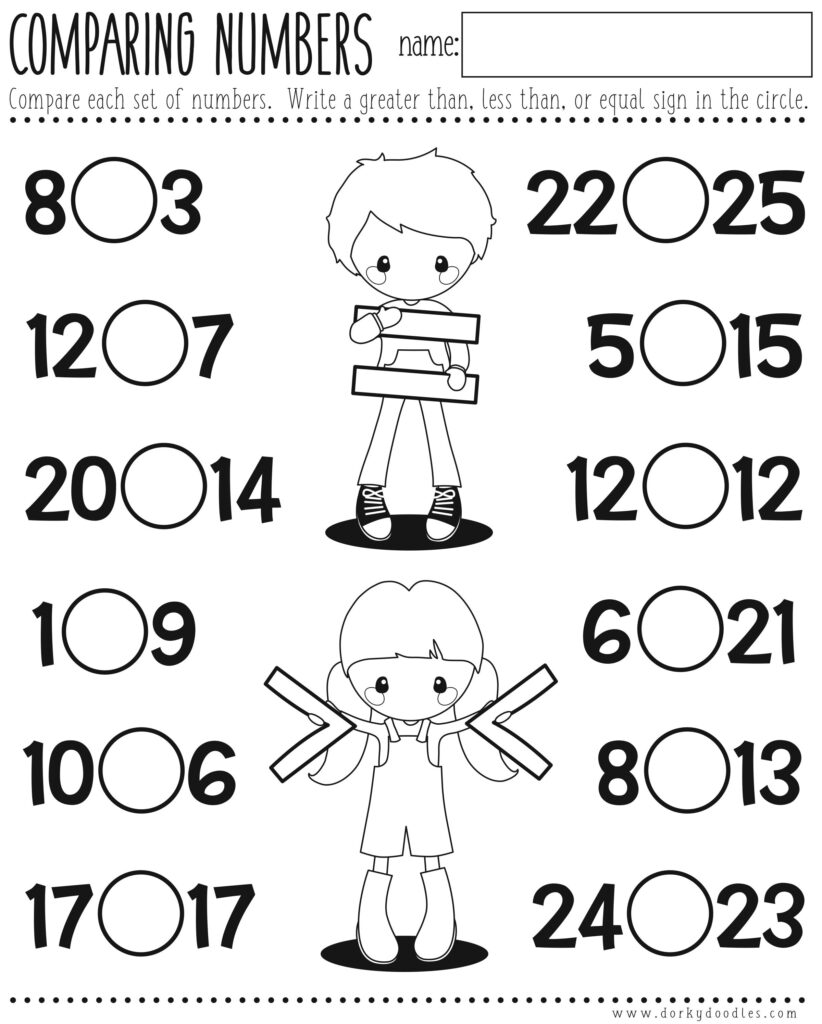
For parents and homeschool families, these sheets are invaluable for individualized instruction and reinforcement. A child might work independently to complete a page while you prepare a snack nearby, allowing them to build the focus required for later grade levels. If a student struggles, you can sit with them to use physical objects like buttons or blocks to match the illustrations on the page, bridging the gap between paper tasks and tactile learning experiences.
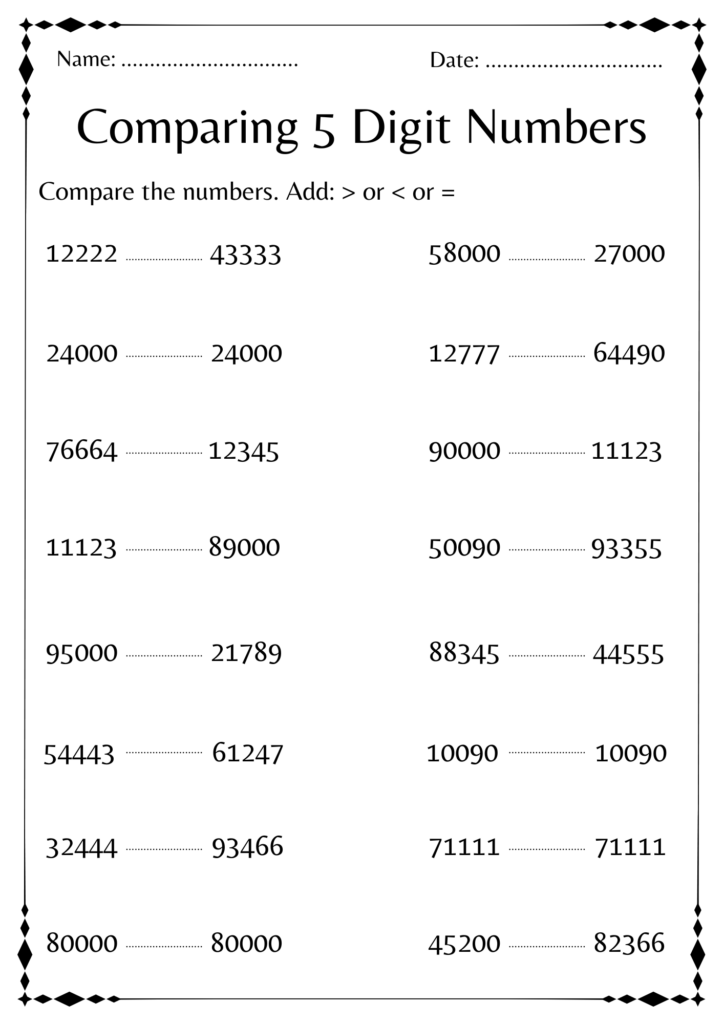
To expand learning beyond the desk, try using the concepts from these worksheets in your daily routine. You might count apples during grocery shopping or compare the number of toys in two different baskets to see which has more. These real-world applications make the lessons stick, ensuring that the skills practiced on paper translate into a genuine understanding of how numbers work in the world around them. Simple games like comparing how many steps it takes to walk from the bedroom to the kitchen can reinforce these lessons in a fun, active way.
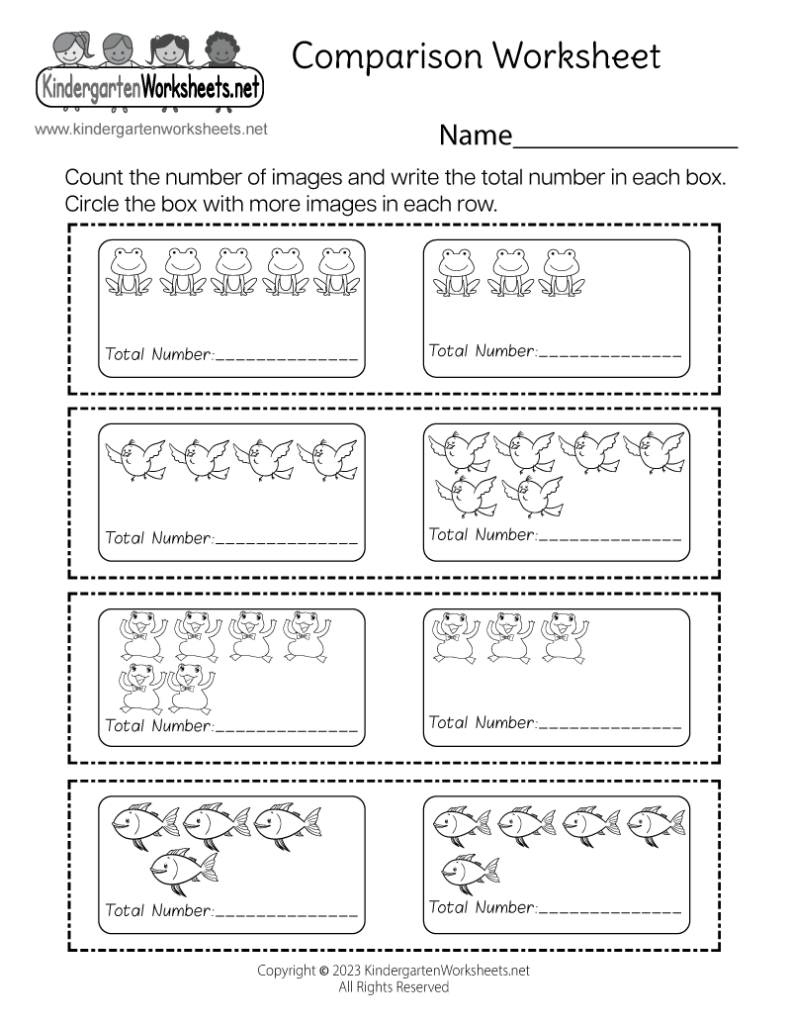
Consistently integrating these varied activities helps solidify the foundational knowledge your child needs for long-term academic success. Whether you are a dedicated educator or a parent supporting your child at home, the key is to keep the experience positive and interactive. By mixing structured printable work with hands-on play, you create a rich educational environment where math becomes an exciting part of the day rather than just another chore.