Many parents search for ways to make abstract concepts feel tangible. Integrating music and math worksheets into your daily routine is an effective strategy to help children visualize how timing, patterns, and fractions actually work in real-world scenarios.
Exploring Music and Math Worksheets
These printables function as a bridge between the arts and sciences by mapping musical notation onto numerical values. When a child looks at a sheet of music, they are essentially looking at a series of fractional divisions represented by whole notes, half notes, and quarter notes. By using these worksheets, learners can dissect these rhythmic values, turning auditory experiences into concrete addition and subtraction problems that clarify how time signatures are built.
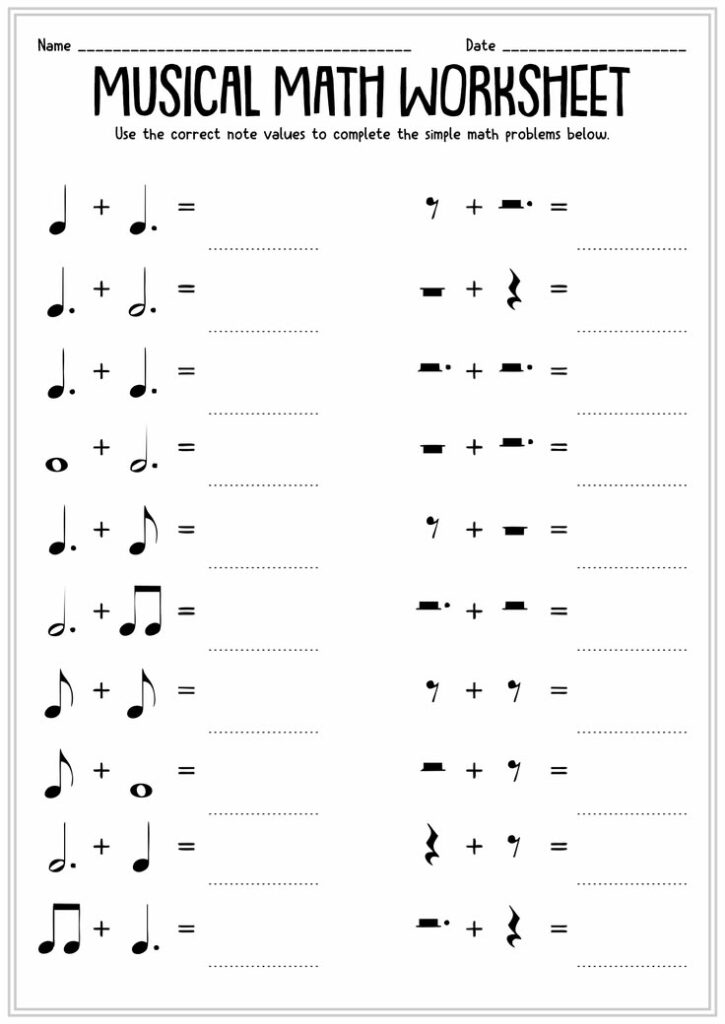
This resource is primarily designed for elementary-aged students who are beginning to grasp basic fractions or learning to read simple musical scores. It works exceptionally well for children who need a visual anchor for their schoolwork or for music students struggling to understand why a measure must add up to a specific total. Because the activities are self-contained, they serve as excellent supplemental practice during homework hours or as a quiet-time bridge in a formal classroom setting.
Key Skills Developed Through Rhythmic Logic
Children practice critical thinking by identifying the value of different note types and calculating how they fit into a single measure. This exercise reinforces their understanding of part-to-whole relationships, which is a foundational skill in both advanced mathematics and rhythmic structure. Beyond simple counting, they also develop an appreciation for patterns and symmetry, which are essential components of musical theory and algebraic thinking.
To get the most out of these materials, start by having the child verbalize the count while they work through each line. Teachers can use these pages to introduce the concept of a common denominator by showing how four quarter notes equal one whole note. It is helpful to treat the worksheet as a starting point rather than a final product, encouraging the student to write their own rhythm at the bottom of the page once they have mastered the provided examples.
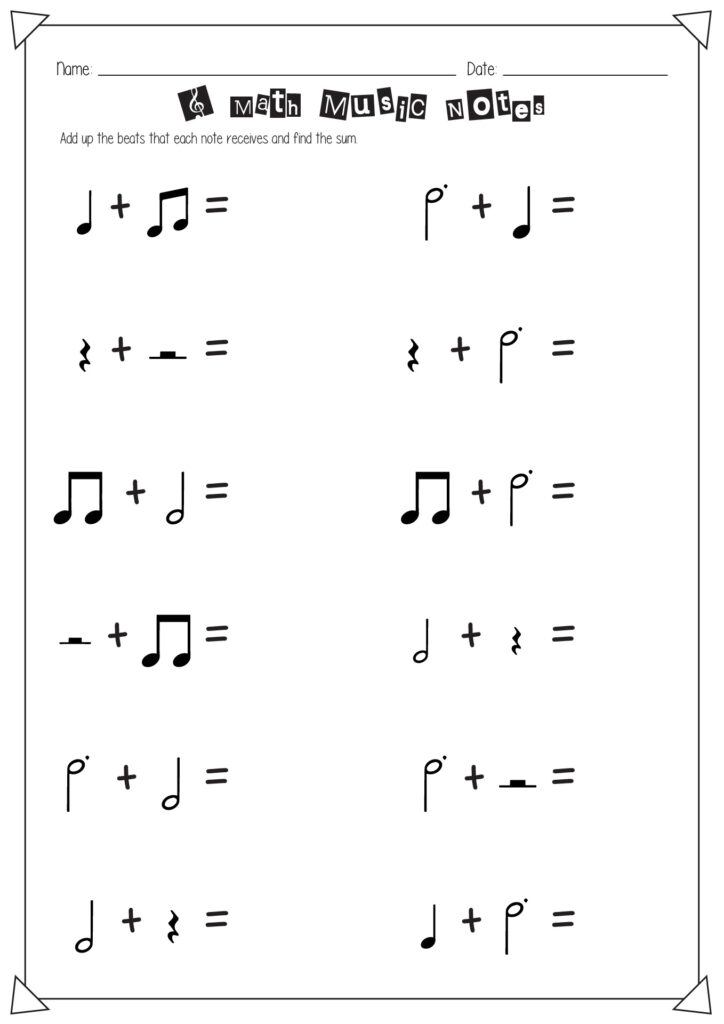
You can transform this paper-based activity into a full-body experience by using a metronome or a simple hand-clapping game. Have the child clap out the notes they have calculated, emphasizing the longer duration of whole notes versus the quick pulse of eighth notes. This auditory feedback connects the numerical result they wrote down to the physical sensation of rhythm, which helps solidify the concept in their memory much faster than passive completion of a page.
Beyond the desk, try drawing rhythmic bars with sidewalk chalk or using colored blocks to represent different musical note durations. You might read books about the history of musical notation or listen to classical compositions while identifying the time signature to see if the math adds up. Encouraging the student to illustrate their own musical staff can also make the process feel creative rather than repetitive, turning a standard math lesson into a personalized art project.
If the child is particularly musical, ask them to compose a short melody after they finish the worksheet math problems. This application of their new knowledge forces them to apply the rules of addition they just practiced in a creative, low-pressure environment. It shifts the focus from merely answering questions to using logic as a tool for personal expression, which often increases engagement significantly.
By looking for these small intersections between subjects, you provide a more cohesive educational experience that feels relevant to the child's interests. Whether you are a parent looking to liven up a rainy afternoon or a teacher trying to explain fractions in a new way, these resources offer a unique path to understanding. Once a child sees that math is simply the heartbeat of music, they often lose their intimidation toward both subjects and begin to see the hidden patterns in the world around them.