Building a strong literacy foundation starts with recognizing common spelling patterns. Using targeted resources like an family words worksheets helps young learners bridge the gap between simple letter recognition and reading their very first consonant-vowel-consonant words.
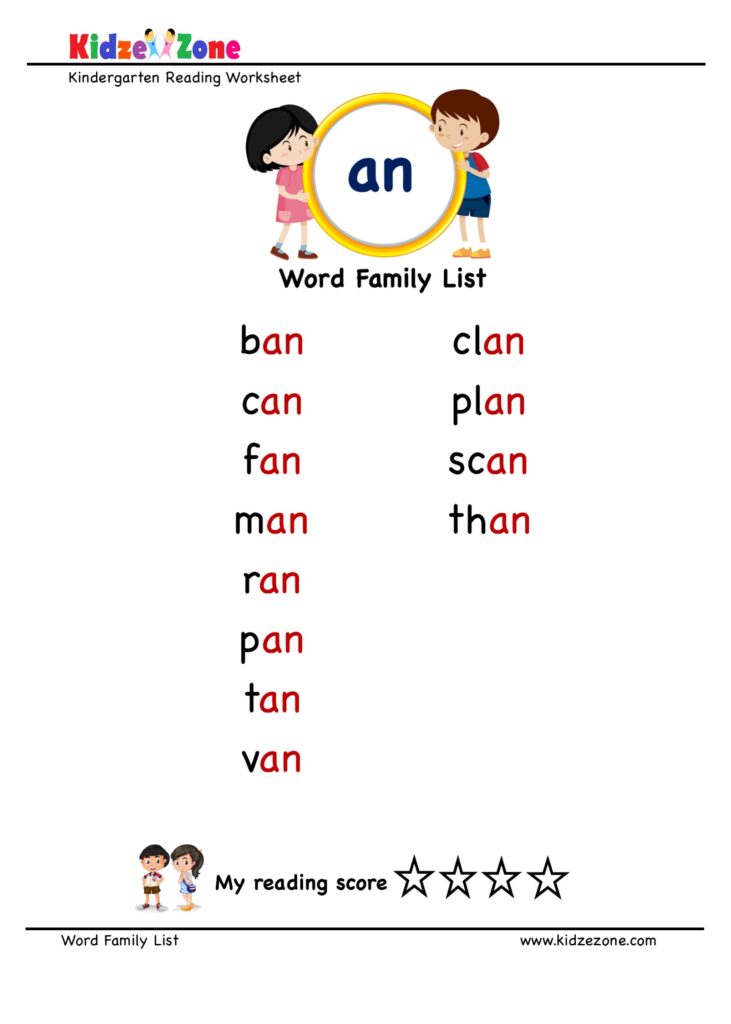
These educational materials are specifically designed to introduce children to word families, which are groups of words that share the same ending rime. By focusing on the 'an' sound, students learn how to manipulate initial consonants to create new words like man, pan, ran, and fan. This repetition is vital for internalizing phonics rules and developing the phonemic awareness necessary for successful reading in the primary years. As children grasp these patterns, they gain the confidence to decode unfamiliar words by looking for familiar chunks, a critical step in their academic journey.
Why An Family Words Worksheets Matter
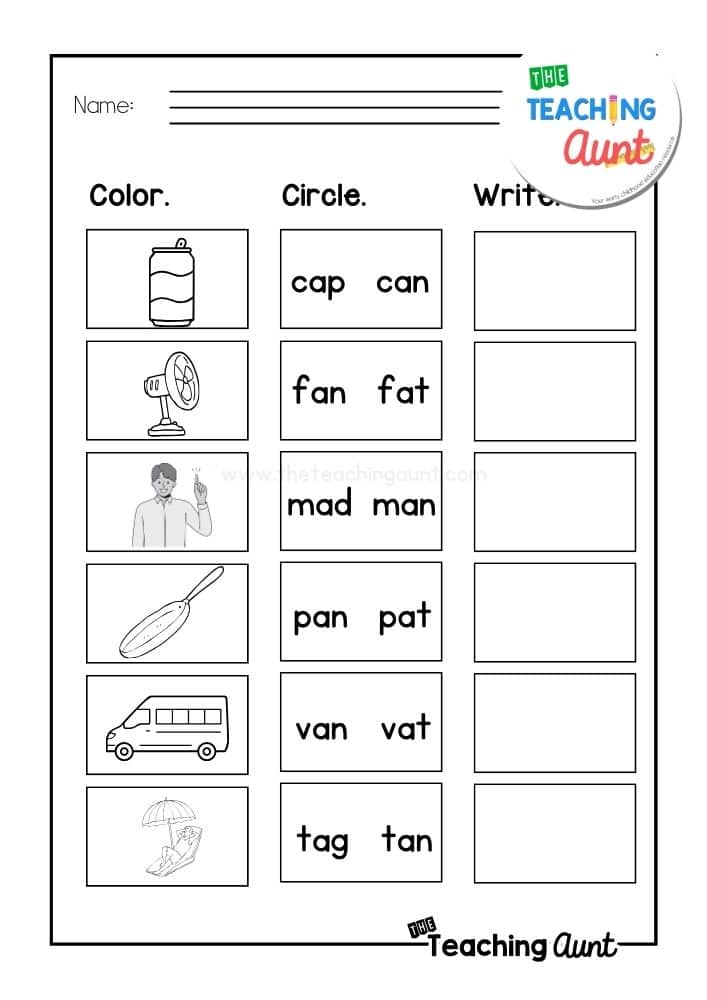
Typically, these worksheets are most effective for preschool, pre-K, and kindergarten students who are just beginning their journey into blending sounds. At this stage, children are refining their fine motor skills through handwriting practice while simultaneously strengthening their auditory processing. The worksheets provide a structured environment where kids can trace letters, write them independently, and associate those shapes with specific phonetic sounds. Providing this visual and tactile experience ensures that young learners are not just memorizing words, but understanding how our language is constructed through systematic phonics instruction.
In a busy classroom setting, these printable learning activities serve as excellent centers or independent work stations. Teachers can use them to assess how well individual students are progressing with letter-sound correspondence and writing mechanics. Because the tasks are straightforward, students can often complete them with minimal supervision, allowing educators to pull smaller groups for guided reading instruction. Whether used as a morning warm-up or a targeted intervention, these sheets help teachers monitor literacy growth across the entire class.
For parents and homeschool families, these worksheets offer a low-stress way to reinforce what is being taught in a school curriculum. They are highly versatile, as they can be completed in a quiet corner of the house or during travel time to keep learning consistent. When working one-on-one, you have the unique opportunity to listen to your child as they sound out each word aloud. This dialogue is essential because it allows you to correct mispronunciations in the moment and celebrate their small wins as they master each new word family member.
Hands-On Phonics Reinforcement
Once your child has finished the worksheet, you can transition to more dynamic, tactile activities that bring the phonics concepts to life. Try using magnetic letters on the refrigerator to build 'an' words, or have your child search for household objects that rhyme with the words they just practiced. For example, placing a real pan on the counter after they write the word on their page creates a concrete connection between the abstract symbol and the physical object. These play-based extensions help cement the knowledge gained during the formal seat work.
Another effective follow-up strategy is to engage in a rhyming game while you are out for a walk or riding in the car. You might say a word from the 'an' family and challenge your child to provide the next one, even if it is a nonsense word. Nonsense words are actually quite useful in early literacy, as they prove the child is truly decoding the sounds rather than just relying on their memory or context clues. By keeping the atmosphere light and playful, you ensure that your child continues to view language as a fun puzzle to solve.
Consistency is truly the key to success when teaching early reading skills to young children. Instead of overwhelming them with long study sessions, aim for shorter, focused bursts of practice throughout the week using these worksheets as a guide. When children see the same word families reappear in their books, their worksheets, and their daily conversations, the information moves quickly from short-term to long-term memory. Over time, you will notice their fluency increasing and their hesitation decreasing as they encounter new vocabulary.
By blending structured paper-and-pencil tasks with interactive, real-world practice, you create a comprehensive approach to reading development. These resources provide the perfect scaffolding for young minds, giving them the tools they need to unlock the world of literature. Whether you are a teacher planning your literacy block or a parent supporting your child at the kitchen table, these simple strategies will help foster a lifelong love of reading and writing. Keep the practice engaging, stay patient, and enjoy watching those early literacy milestones unfold one word at a time.