Mastering the concepts of inequalities is a fundamental milestone in middle and high school math. Our new algebra 1 inequalities worksheet offers the targeted practice students need to move from simple equations to understanding ranges and boundaries with confidence.
This resource is designed specifically for students typically in 8th or 9th grade who are beginning their journey into formal algebraic thinking. By focusing on variables, comparison symbols, and number lines, this activity helps students bridge the gap between basic arithmetic and more complex algebraic structures. It serves as an essential tool for reinforcing the rules of isolation and the unique behavior of negative numbers when multiplying or dividing.
Understanding Algebraic Inequalities
When students work through an algebra 1 inequalities worksheet, they are learning far more than just how to flip a sign. They are developing the logical reasoning required to determine if a solution set includes specific values or requires an open versus closed circle on a graph. This material covers core skills such as solving multi-step problems, translating verbal expressions into mathematical inequalities, and verifying results through substitution to ensure accuracy.
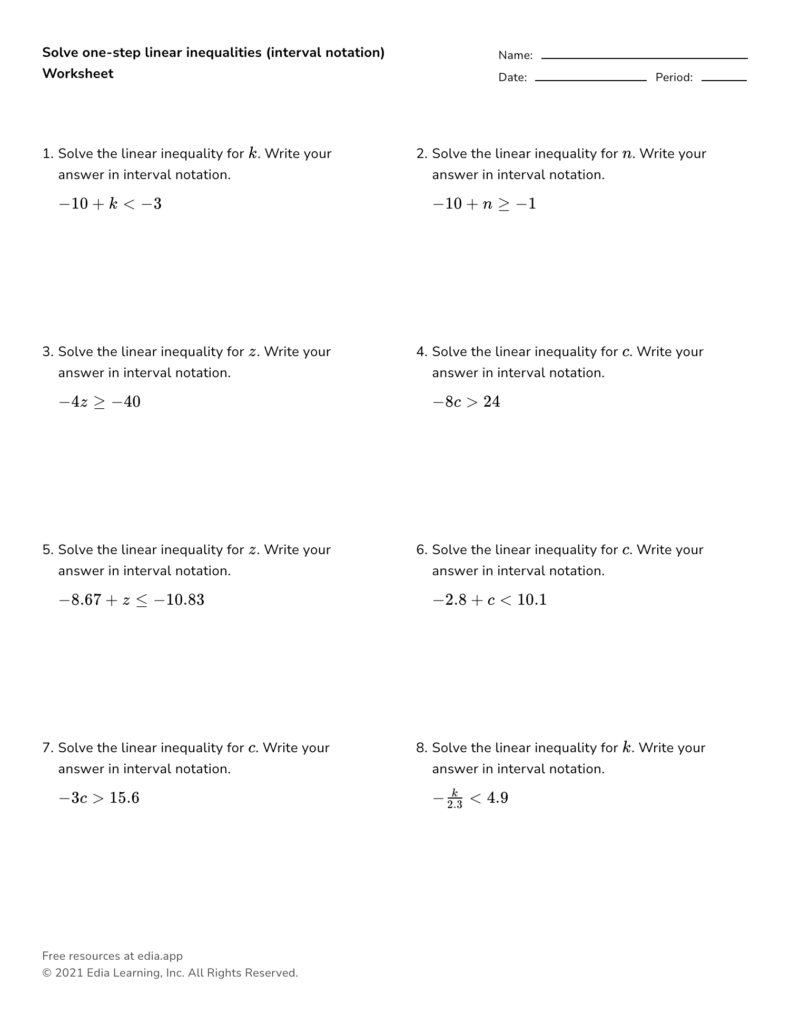
For parents and teachers, the beauty of this printable activity lies in its versatility within the learning environment. In a classroom setting, it works perfectly as a guided practice session or an exit ticket to assess immediate understanding of the lesson. Homeschool families can use these pages as a low-pressure way to review concepts during the week, providing a clear visual record of a student’s progress as they move toward more advanced topics like systems of equations and quadratic functions.
The Value of Consistent Practice
Mathematics is a cumulative subject, and consistent repetition is the most reliable way to build long-term retention. By revisiting these problems regularly, students move beyond rote memorization and toward a deeper conceptual fluency. This regular math practice helps to solidify the connection between symbolic notation and the physical reality of number lines, ensuring that the logic becomes second nature rather than a source of frustration.
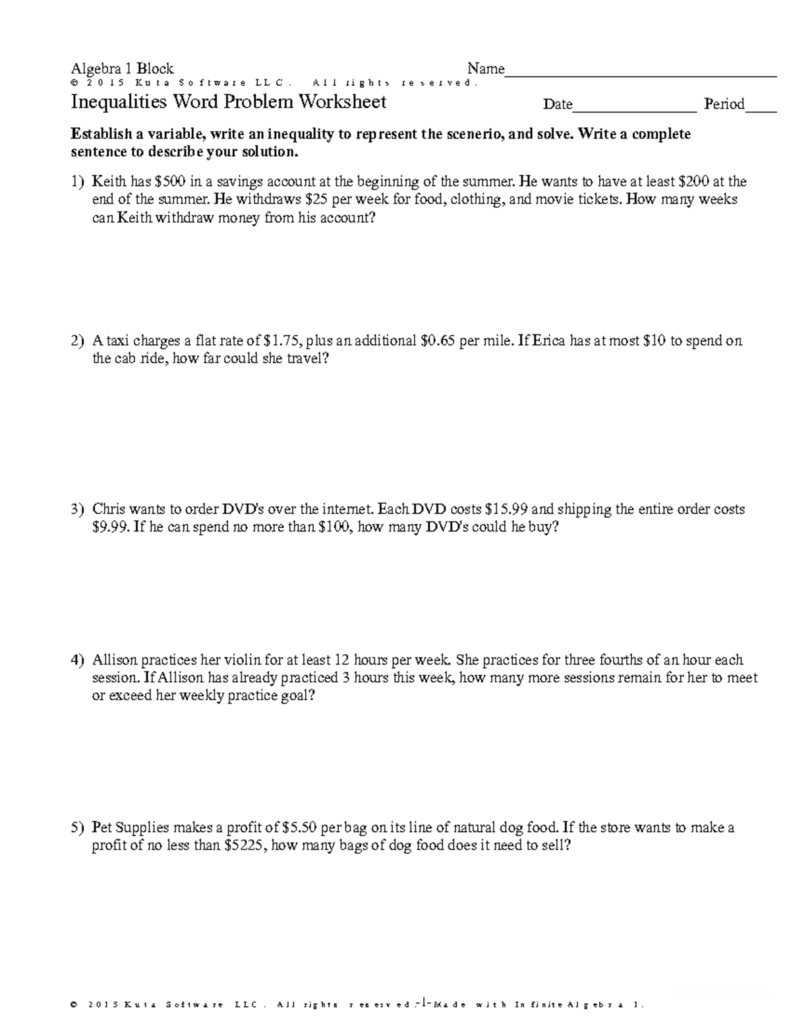
Teachers can gamify these learning activities by turning a standard worksheet into a relay race or a peer-tutoring session. For instance, pairing a student who feels confident with one who is struggling allows for collaborative learning, which often demystifies the steps involved in solving inequalities. You might also encourage students to create their own real-world scenarios, such as budget limits or weight restrictions, to see how these math concepts apply to their daily lives outside the textbook.
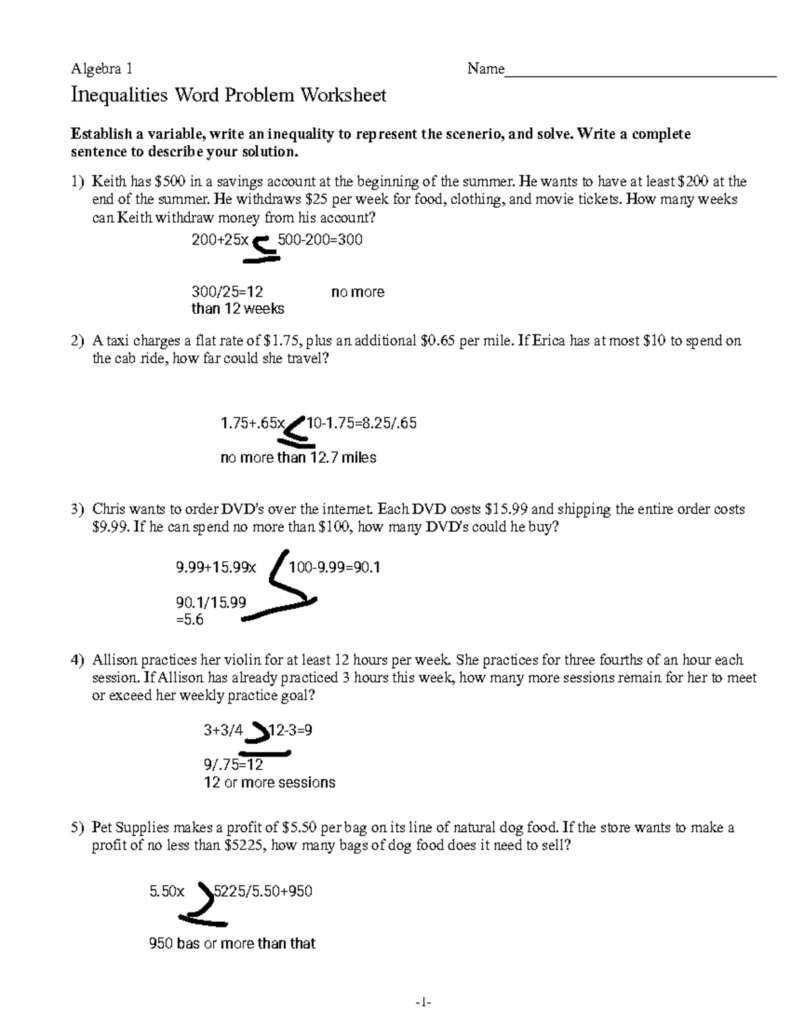
Beyond the basic mechanics, these exercises prepare the mind for future challenges in geometry and calculus where inequalities play a critical role. When students master these skills early, they gain the academic stamina to tackle complex systems without feeling overwhelmed. Providing clear, printable resources allows you to create a structured curriculum that supports individual pacing and allows for extra help whenever a specific concept feels particularly tricky.
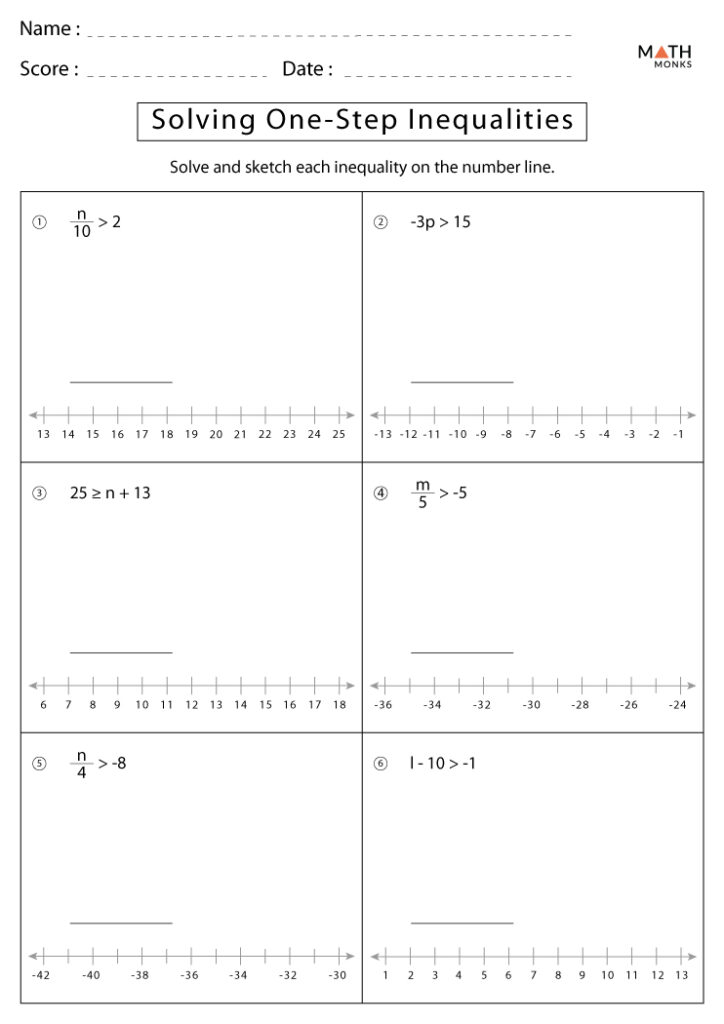
Incorporating this worksheet into your weekly routine provides a steady rhythm to your math instruction. Whether you are assigning it as formal homework or using it as a quiet morning activity, the focus remains on building accuracy and speed. As students become more comfortable with these inequality symbols, they will find that their overall confidence in algebra increases, setting them up for success in their upcoming units.
Encouraging a positive attitude toward these repetitive tasks can make a significant difference in how students perceive their own abilities. By emphasizing progress over perfection, you create a classroom or home environment where mistakes are viewed as necessary steps toward discovery. With the right tools and a consistent approach, every student can learn to navigate the world of algebra with clarity and ease.